
Knee ligaments
Author Dr. Szabolcs Gáspár | 2019.05.07.


One of the most complex joints in our body is the knee joint, which is subjected to significant forces during everyday life and sports. It is a joint less covered by soft tissues and its stability is ensured by the knee ligaments.
Most commonly, the anterior cruciate ligament and the medial collateral ligament are injured, while the posterior cruciate ligament and the lateral collateral ligament are rarely affected. The anterior cruciate ligament is typically injured during twisting movements or lateral displacement of the joint. Typical injuries of skiers, football players and sudden stop ball players.
The diagnosis can be made by an orthopaedic specialist on the basis of an MRI or ultrasound scan taken after the injury and a physical examination. In this type of injury, no X-ray is taken because the X-ray only shows the bony structures and not the soft tissues.
Depending on the extent of the damage, we can talk about full- or partial rupture. Usually you may experience swelling, pain, or feel unstable, as if your movements are restricted, and in the case of a complete rupture, you may experience a popping, cracking sensation.
If you are sports exercise in which the knee is subjected to high stress, great emphasis should be placed on injury prevention and avoidance. In such cases, targeted strengthening and stabilising exercises are recommended so that the muscles can support the work of the ligaments. It can also help to develop proprioception, which is the sense of the body's position and movement in space and time, which can be achieved by performing specific exercises.
Knee joint stability in the knee ligament injuries is weakened, which can lead to damage to the cartilage surface, so joint wear can develop if it is not treated professionally in time. If you experience any of these symptoms after an injury, seek medical attention as soon as possible.
It is not only for professional athletes that increased attention to stability is recommended, but also for those with loose joints. So the older people can reduce the risk of falls and amateur athletes can prevent painful injuries.
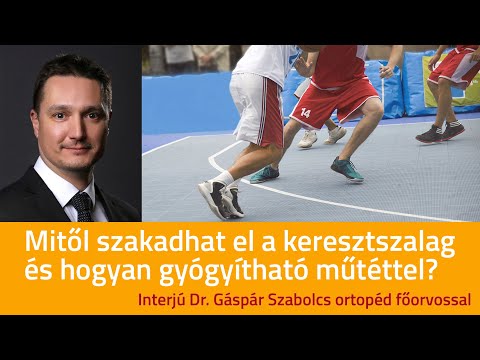
Is knee ligament surgery necessary?
Specialist opinion, there are two possible ways to treat injuries.
Physiotherapy it is possible, if you can strengthen the muscles and build up good statics to give the joint sufficient stability to carry out your everyday activities, surgery can be avoided. However, the risk of subsequent cartilage surface lesions and wear and tear remains. In general, damage to the collateral ligaments, partial tears and over-extension can be treated by wearing a brace and physiotherapy.
Surgery typically recommended for total knee ligament tears, especially for athletes. A ligamentoplasty is performed to replace the damaged ligament from a tendon in the thigh.
The aim of scar treatment is to prevent tissue breakdown, thus preserving function and range of motion, which can be achieved with laser treatment in the early stages and ultrasound and manual treatment after wound healing. Post-operative hematoma absorption can also be facilitated by physiotherapy and the use of kinesio tape can speed up the process.
Post-operative rehabilitation follows a strict protocol, and it is essential that it is followed, as excessive exertion and inappropriate loading can lead to serious joint damage. The aim of rehabilitation is to restore range of motion and stability, proprioception, and the process is guided by the specialist and the physiotherapist control, which is facilitated by early guided gymnastics and scar treatment.
We believe that free, pain-free and enjoyable exercise is for everyone!
If you suffer from musculoskeletal problems, come to the Budapest Musculoskeletal Private Clinic now, where we offer you the most modern treatment options and trained specialists!
Call 06 1 44 33 433!