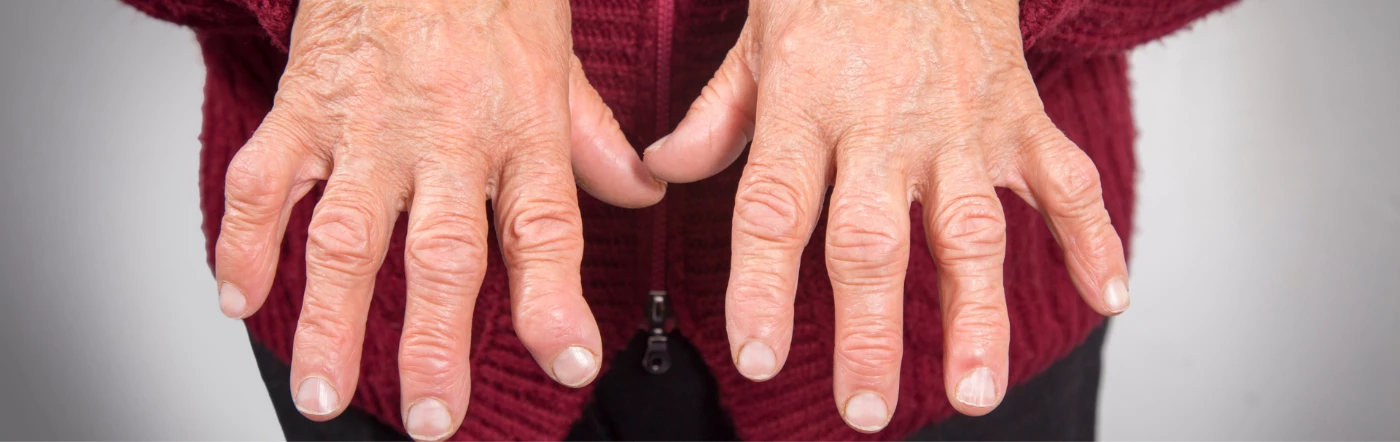
Rheumatoid arthritis
Author Dr. Dóra Mihola | 2018.10.20.


More and more young people today are affected by some kind of musculoskeletal problem. One of the most insidious, but increasingly common, of these is rheumatoid atritis, one of the most common and prominent of the autoimmune joint diseases.
Rheumatoid arthritis
A specialist rheumatologist in our private practice, Dr. Flórián Szeles writes on this issue as an expert on the subject.
Autoimmune disease, as the name suggests, the dysfunction of our immune system means. In exactly such a case, our immune system increased activity and produces abnormal antibodies against its own body cells, which causes inflammation. A rheumatoid arthritis is one of the most common types of autoimmune disease, which, unlike many rheumatic diseases, is usually not in old age you will sign up. Often occurs even in adolescence, usually affecting young adults and middle-aged people (30-40 years). Interestingly, statistics show that 3 - 5 times more women are affected by this disease than men.
What are the symptoms?
- Most of the time the starts in the small joints of the hand or foot the process. At first strange stiffness you can feel, especially in the morning, as if you have to „get your fingers in” because they are hard to move.
- The main symptom may occur after or even at the same time: a pain. Continuous inflammation of the area is associated with severe pain, which can also cause specific mobility problems over time. For example, in the case of foot joint involvement, walking difficulties occur at a very early age.
- Sometimes the inflammation causes fever, which is also difficult to mitigate.
- May also perform fatigue, lethargy, weakness, sleep disturbance which the lay person often does not even associate with other complaints.
- Persistent arthritis causes visible deformation over time on the affected body part, such as the back of the hand or wrist.
- In the absence of therapy, the disease worsens and more serious complications may occur: inflammation can spread to internal organs, liver, kidneys, heart, blood vessels. But the inflammation can be reversed - with appropriate and professional treatment.
What happens in the joints?
The inner lining of the joints becomes inflamed and therefore produces more fluid, which is why our joints look swollen. If the inflammation persists for a long time, the inflammation of the lining spreads to the cartilage, cartilage capsule and later to the bone, leading to deformation of the joints.
Early diagnosis is very important (to get the patient to the right specialist as soon as possible) and start timely targeted, drug therapy!
What is the root cause?
Medical science has not yet found a specific cause, but genetic predisposition and certain environmental and lifestyle factors have been shown to influence the development of the disease. Rheumatoid arthritis is therefore hereditary. Smoking, high stress, frequent viral illnesses and depression are all risk factors.
What is the solution?
As a first step, it is important to make sure that correct diagnosis: to do this with painful and stiff joints see a specialist rheumatologist, who has knowledge of immunology. Physical examination, laboratory and usually X-ray tests can be used to define the disease and set up an appropriate therapy. Steroidal and non-steroidal medications, physiotherapy, special joint exercises, anti-inflammatory wraps can achieve good results. do not stop at treating the acute problem! Autoimmune diseases need to be „controlled” with medication for the rest of our lives”.
The key word is regular and correct treatment, and anyone with rheumatoid arthritis can live a FULL LIFE!