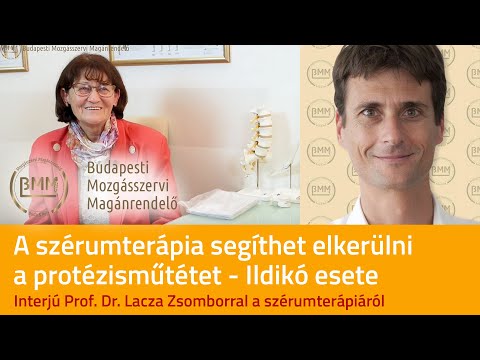
PhD research of Prof. Dr. Zsombor Lacza
Author Prof. Dr. Zsombor Lacza PhD | 2023.05.24.


Prof. Dr. Zsombor Lacza PhD, a renowned orthopaedic traumatologist at BMM, gave an exciting interview on the index about injuries in athletes and how to prevent accidents in the future.
Meet the professor!
Prof. Dr. Zsombor Lacza orthopaedic-traumatology specialist, PhD, Doctor of the Hungarian Academy of Sciences, Vice Rector of the University of Physical Education. He specialises in regenerative medicine, i.e. the development and clinical application of therapeutic procedures to rebuild damaged tissue and replace lost function.
His narrow clinical speciality is the treatment of sports injuries and injuries, regeneration of the knee joint through minimally invasive solutions.
The key for athletes, that after an accident as much as possible to return sooner to professional sport, and this is one of the main services offered at the TF Sportmedicina Centre, where Prof. Dr. Zsombor Lacza is also active.
Treatment starts by identifying risk factors, addressing lifestyle and dietary issues, and taking measurements with our instruments to detect hidden cardiovascular problems. To avoid further injury, we also identify movement pattern errors and recommend compensatory activities accordingly.
-says the professor
After the appropriate tests put together a personalised package of recommendations for patients, which depends on performance, since a hobby sportsman needs one thing and a professional sportsman another.
What are the most common complaints?
Typically knee, spine, hip, joint complaints Patients are taken to the TF Sportmedicina Centre, where they are tested and then classified into different risk groups. Those who have been diagnosed with incipient spinal hernia is, or cartilage damage in the big joints, hip, knee, they are in the medium risk category, they can no longer do any sports. People with spinal problems, for example, should avoid breaststroke and should instead swim fast or backstroke.
The number of people in the high-risk group is relatively low and they can move around under increased supervision. Individual physiotherapy sessions led by a physiotherapist can always help.
The test looks at the whole kinetic chain to identify where the problem is; hip, knee, ankle, forefoot - if one of these is not working well, the others compensate and therefore quickly become overloaded. We've used camera systems, pressure sensors to examine over a thousand subjects, volunteers, athletes, we've even gone out to the UTE sports academy.
It turned out that when someone jumps off, steps off, steps forward when running, and the knee joint turns inwards in the process, this significantly increases cartilage damage and the strain on ligaments.
Five years of research have led to the development of a tool that can measure with greater certainty the movement pattern error that puts people at risk.
With the right training plan, the number of injuries, such as frequent cruciate ligament tears, can be significantly reduced. Artificial intelligence is already making an impact: Prof. Dr. Zsombor Lacza and his team are already working on filter out healthy and abnormal factors by feeding an algorithm into artificial intelligence. Using this method in general, many athletes its development could be positively influenced.
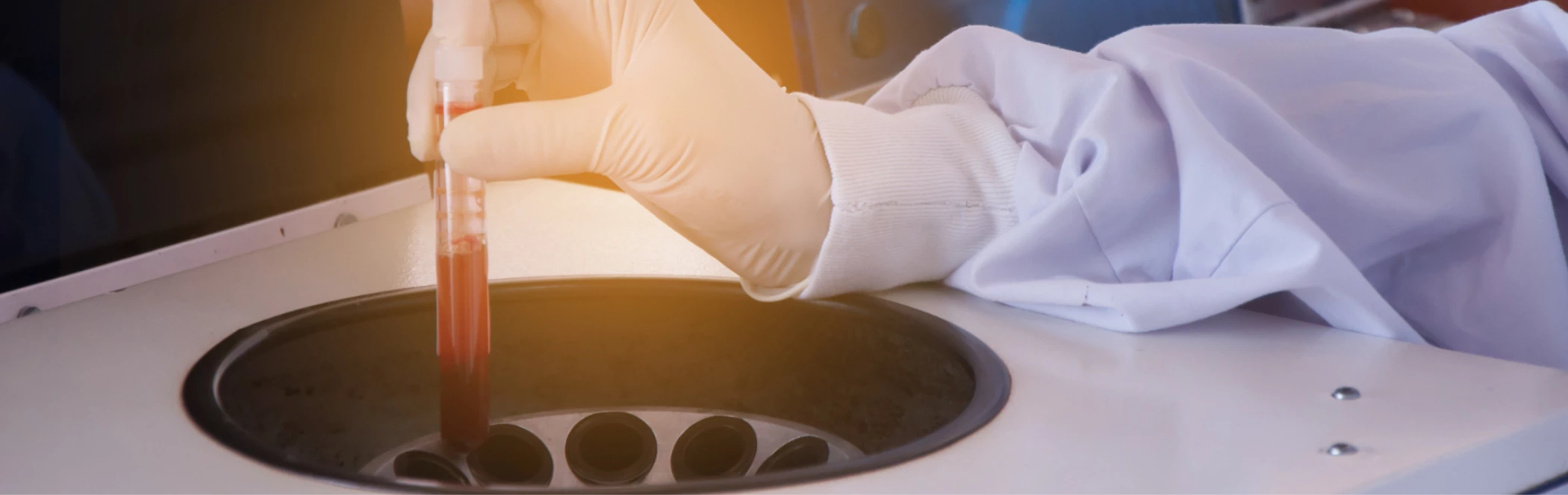
Blood plasma for bone and cartilage building
Like aerospace or Formula 1, elite sport is a priority area, a primary focus for cutting-edge technologies and innovations to improve performance, which will later be incorporated into everyday practice. The critical question is whether an athlete who has devoted 20 years of his life to this has three years left. Overtraining can often lead to arthritis, but also to premature cartilage wear. To solve this problem, we have developed a blood serum from our own sample.
Blood serum is a biological preparation, which is injected into the knee joints to reduce inflammation and pain. The effects of the serum are felt after a few weeks and can help the patient - in this case the athlete - to return to their previous performance.
The cartilage wear, however, is a common musculoskeletal complaint, which affects a large part of the population, the professor and his team have created an off-the-shelf formulation of the serum.
For biological serums, the difficulty is that they can fall under five different regulatory areas, it does not matter which one they fall under, as they have to comply with them during the development phases.
Another of their plasma-related research projects that has been translated into practice is a serum for building jawbone in dental prostheses. More than 10,000 bone samples, freeze-dried by the tissue bank in Győr, have already been transplanted. We are now working on having an approved tissue bank background ourselves. I believe this could be done within 2-3 months. Typically, we have been grafting powdered femoral heads left over from surgery with serum albumin, which has reduced the body's reaction to the foreign body. This allows the body to self-repair up to half a pinky bone defect in 6-8 months. This is the result of nine years of scientific work.
The professor's research
Our scientific paper describing the cytokines released in athletes during exercise has just been accepted for publication in the journal Sports. Our observations showed that because they have this family of molecules active in their bodies, this is probably why they were more easily infected with coronavirus, but because they had no circulating antibodies, they were repeatedly infected. Another new discovery, also published, is that we have found a serum version that stimulates the proliferation of cartilage cells and stem cells and is strongly anti-inflammatory. We are now working to translate this into a pharmaceutical standard.