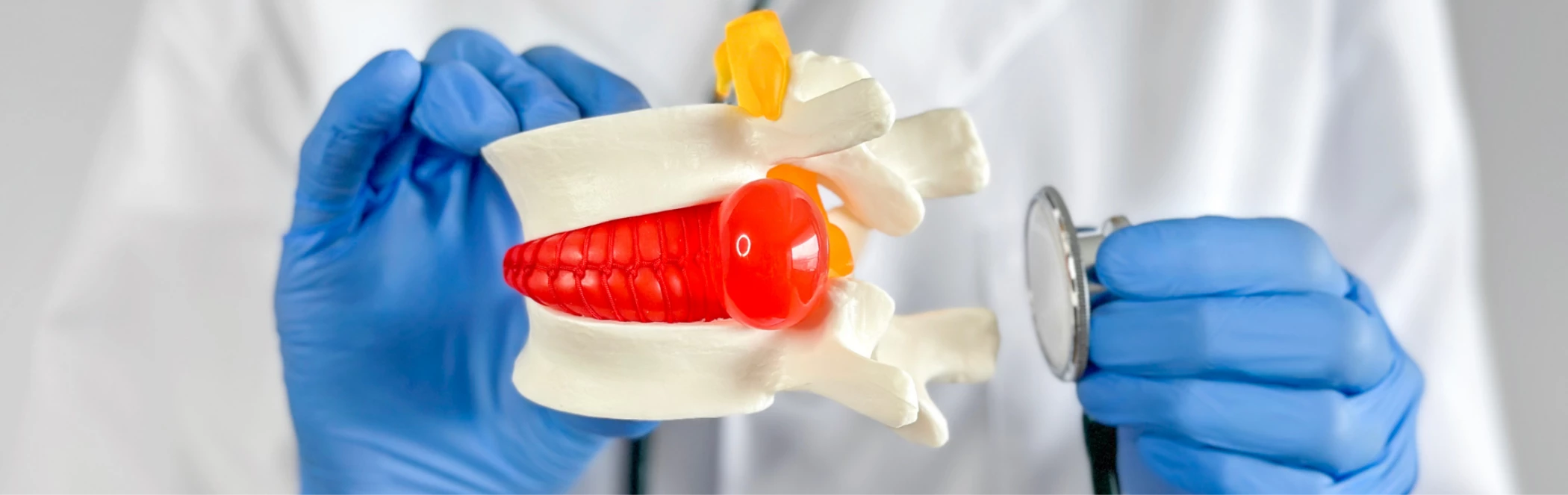
Hernia of the cervical spine - through the eyes of a doctor and physiotherapist
Author Csilla Szabóné Bora | 2021.06.02.


Disc herniation facts - about symptoms, how to check for it and how to treat it effectively.
The back pain is one of the most common musculoskeletal problems, and we are at least 80% likely to experience its nagging symptoms in our lifetime. The underlying cause of the pain is often the lumbar spine disc herniation, also known colloquially as herniated disc. The two lower lumbar discs of the spinal column are most often affected by disc herniation, because this is the part of the spine that is under the greatest stress. A sedentary, inactive lifestyle and sedentary work both increase the risk of developing disc herniation.
Symptoms of disc herniation
The main symptom of disc herniation (herniated disc) is Pain, and other complaints and symptoms may also occur. The appearance and perception of these largely depends on the location of the hernia, i.e. its height and laterality in the spinal canal. A the most common symptoms of disc herniation and complaints in addition to the pain:
- Numbness
- Vascular disorder
- Muscle weakness
- Urinary or defecation disorders (incontinence, urinary retention)
A hernia causes mechanical irritation to the surrounding nerves, which is further aggravated by the inflammation that develops. This so-called sterile, i.e. non-infectious, inflammation is caused by the release of certain chemicals in the affected nerves and is a major contributor to the pain. Lumbar disc herniation most commonly affects the lower lumbar nerve (sciatic nerve), which is commonly known to be inflamed known as sciatica.
Investigating a herniated disc
In the case of a herniated disc, it is typical that the patient can usually show a line along which the pain can be traced. This usually falls on an area supplied by a nerve. Based on this, and a careful physical examination, and described by the patient compared with objective symptoms often the level of the herniated disc in the spinal column can be predicted before the diagnostic imaging study. A imaging tests (CT or MRI) then information about the exact location and extent of the herniation.

Effective treatment options for disc herniation
Conservative therapy
From acute low back pain patients presenting with at least 80%, temporary analgesic treatments as a first step are effective. This is the first phase of conservative treatment, which most often involves non-steroidal anti-inflammatory and muscle relaxant medicines sometimes with a single steroid injection if the pain is unbearable for the patient. Pain relief and anti-inflammatory treatments usually 6 - 8 weeks are proven to be effective - for many people, the lower back pain is completely gone within this time, and for most, the symptoms are significantly reduced. At the same time as the pain is reduced, it is also recommended to start regular physiotherapy (physical therapy) for a few weeks under the strict supervision of a specialist. Properly applied physiotherapy can also contribute to the improvement of the patient's condition and help to avoid the recurrence of lower back pain.
What the physiotherapist can do
The active participation of the patient is essential in the conservative treatment of disc herniation. Also of particular importance professional strengthening of the muscles around the spine (core stabilisation training) and learning correct posture. This should be emphasised from a young age, before the onset of pain, as various types of spinal pain can affect more than just the elderly.
There are a number of globally recognised techniques for relieving spinal pain, which when used together can provide a significant solution for low back pain:
- Physiotherapy procedures
- Various soft tissue treatment techniques pl.: FDM (Fascia Distortion Model), manual therapy
- Kinesiotape
- Sputum therapy
- Massage gun
- McKenzie Mechanical Diagnosis and Therapy® (MDT) Method®
From MDT is an internationally recognised therapy is recognised not only in the assessment and treatment of spinal pain but also in the treatment of pain in the extremities, on a scientifically sound basis resting method. The technique is the brainchild of New Zealand physiotherapist Robin McKenzie and has been used around the world for almost 30 years. MDT therapists are highly trained, both in assessment, diagnosis and treatment, so are experts in all areas of musculoskeletal problems, whether it is joint, muscle or complex pain. The McKenzie MDT method also involves the active participation of patients.
The personalised physiotherapy to find solutions to the problems that arise as soon as possible. Every person is different, and therefore often a different solution to the same complaint will work for one patient than for another. Different techniques and procedures can therefore help to provide the most effective treatment for everyone.
Effective treatment options for disc herniation
Surgical therapy
In the case of a herniated disc, there are situations where surgery may be necessary. This usually occurs when conservative treatment methods do not result in any significant improvement and the patient's pain does not decrease. Less commonly, the onset of pain is accompanied by severe symptoms such as paralysis or vegetative disorder, which is immediate, so warrants acute surgical treatment.
If surgical intervention is necessary, it is always according to the principles of modern microsurgery, using minimally invasive techniques The minimally invasive technique involves making an incision of just 2 cm in the skin of the patient, which is then cut into the neurosurgeon doctor, which is also essential for the operation to be carried out.
The successful disc herniation surgery one of the key elements (in addition to a well-chosen and trained neurosurgeon) is the availability of a good quality, clearly explained diagnostic imaging findings confirming disc herniation (CT or MR recording). In this case, there is a good chance that immediate cessation of pain after surgery, and returning to normal daily activities and lifestyle after recovery.
After a herniated disc, it is also worthwhile to start professional and personalised physiotherapy with a physiotherapist during the recovery period. And by incorporating regular physical exercise into your daily routine, you can even prevent the next disc herniation!
We believe that free, pain-free and enjoyable exercise is for everyone!
If you have back pain, don't wait to have it checked out!
At the Budapest Musculoskeletal Private Clinic, the most qualified orthopaedic specialists and physiotherapists, as well as providing you with the most modern therapeutic treatment options. In Budapest - 3 locations - we welcome you in a pleasant environment every day of the week.
To register, call +36 1 44 33 433
BMM - Outstanding expertise, a demanding environment and targeted therapy in one place!
Have a question about disc herniation? Write to the doctor replies! via our website, our specialist will answer you free of charge by e-mail!