
Is your child badly behaved?
How to detect and eliminate it!
Author Dr. Gergely Holnapy | 2019.08.27.


Good posture is important at all ages. Even at a very young age, children can show signs of poor posture, which can lead to persistent postural problems later in life. In children, this requires particular attention, as poor posture in youth often leads to scoliosis, which can lead to premature cartilage damage or disc herniation. In our previous article Dr. Bence Balázs Moravcsik, an orthopaedic specialist at BMM, will draw parents' attention to risk factors, solutions and the importance of prevention.
When do we talk about sloppy posture?
This problem, which usually affects children, is discussed when scoliosis has not yet developed, but poor posture is becoming ingrained. Over time this can lead to forced posture, which can be permanent, especially in children. Unfortunately, failure to address and downplay the importance of poor posture can lead to scoliosis, which can cause serious back and low back pain as an adult. However, with the right exercise, it can be easily and quickly remedied - and scoliosis prevented.
What should you look out for as a parent?
What is important to observe is that:
- How your child holds himself or herself when sitting and walking
- Whether the shoulders and hips are symmetrical, as asymmetry can be a symptom of scoliosis. In this case, it is worthwhile to have a check-up with an orthopaedic specialist as soon as possible
In our video below, we show you how as a parent you can control your child's posture.
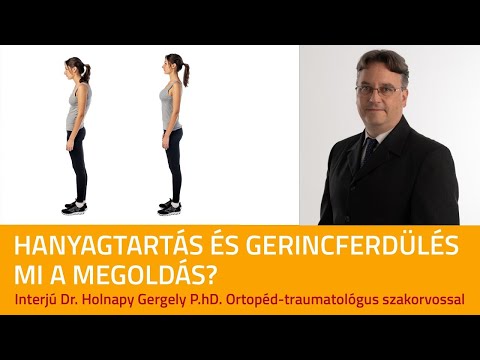
What causes it?
It is a shocking fact that today 60% of kindergarteners and 80% of secondary school students have some kind of postural problem. In most cases, there is no deformity in the vertebrae, but the poor posture is mainly related to weakness in the muscles of the back, abdomen and pelvis.
There are several reasons why it may develop, for example:
- The sudden growth
- Reduced muscle load-bearing capacity
- The wrong seat, but
- Psychological factors may also play a role
According to our expert, this is mainly due to the sudden growth of the muscles in youth, because the muscles cannot develop at the same pace as the bones. However, there is a solution to the upset muscle balance.
4 types of negligence:
- A flat back is when the curve of the backbone and the lumbar (waist) curve are reduced, resulting in a flat back.
- A kypholordotic back is when the dorsal and lumbar curvature is more pronounced than normal.
- We speak of a saddle back when the degree of dorsal hunch is normal but the lumbar hunch is increased.
- In the case of a convex back, the dorsal curvature also extends to part of the lumbar spine.
In all cases, diagnosing and treating the problem as soon as possible is key. Early treatment can avoid a lot of pain and discomfort in everyday life.
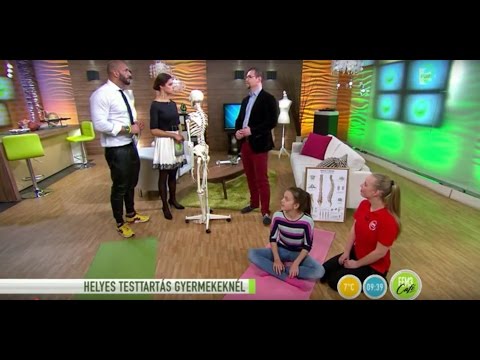
What is the solution?
Physical education, body awareness, daily movement and sport all contribute to the proper musculoskeletal development of the child. Through movement therapy and exercise, the deep muscles responsible for posture can be developed from a very early age, thus avoiding musculoskeletal problems later on.
If a problem has developed, it is recommended that you see a physiotherapist as soon as possible, as specific, personalised paediatric therapy can help to reverse the problem.

Dr. Gergely Holnapy PhD
Assistant Professor of Orthopaedics
Dr. Bence Moravcsik
Orthopaedic traumatologist
We believe that free, pain-free and enjoyable exercise is for everyone!
At the Budapest Musculoskeletal Private Clinic, the most qualified orthopaedic specialists and physiotherapists, as well as providing you with the most modern therapeutic treatment options. In Budapest - 3 locations - we welcome you in a pleasant environment every day of the week.
To register, call +36 1 44 33 433
BMM - Outstanding expertise, a demanding environment and targeted therapy in one place!